
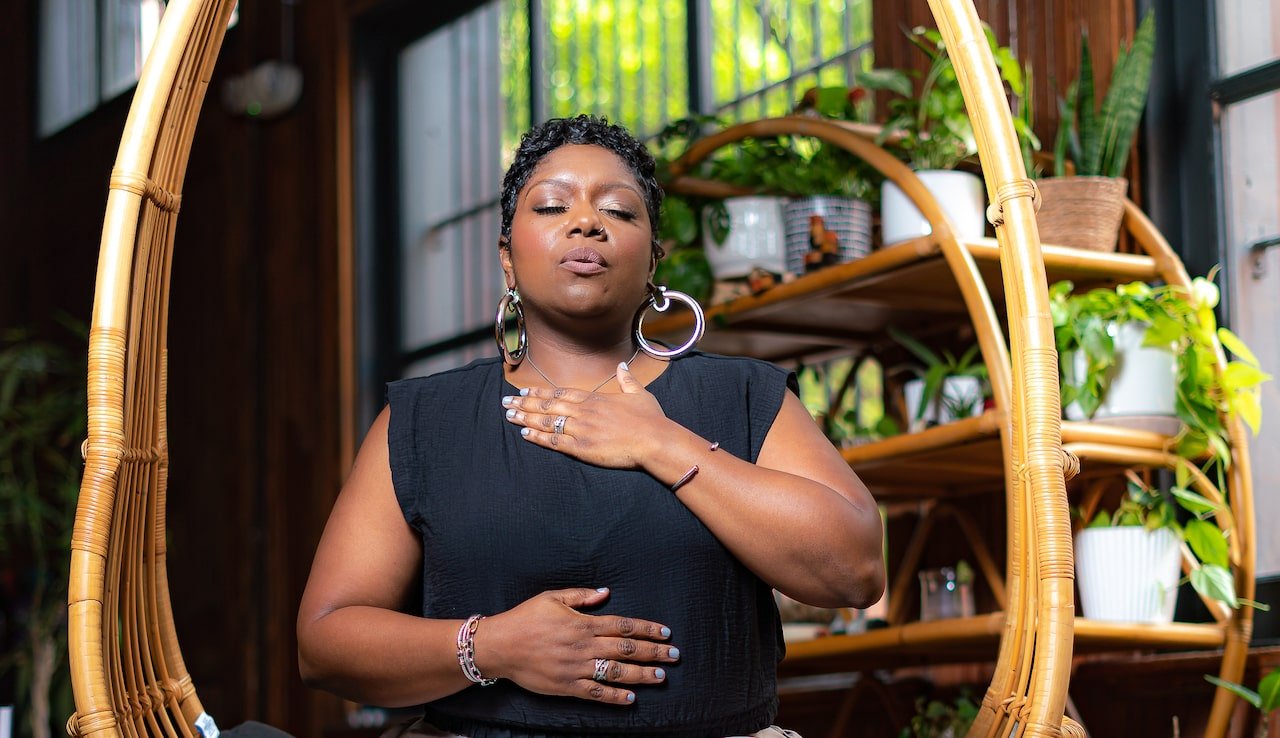
Meet Denisha Smith

The Heart Behind This Work
If you're the one everyone depends on, you may know what it's feels like to carry responsibilities, meet expectations, and show up for others while quietly neglecting yourself.
Many of the women I work with have spent years being the strong one.
I understand that experience personally.
I was raised in a single-parent home with three siblings, watching my mother stretch herself thin to meet everyone's needs while quietly sacrificing her own. She worked hard, showed up for everyone, and kept her relationship with God and our church community at the center—even when she was exhausted.
Her strength shaped me.
But her exhaustion shaped me too.
I learned early how to be the dependable daughter, the high achiever, and the one others could rely on while often silencing my own needs. Like many Black women, I learned how to push through, stay composed, and keep going no matter what it cost me.
That experience sparked a deeper curiosity about healing not just emotionally, but physically, relationally, and spiritually.
Through years of trauma-focused training, studying the nervous system, and integrating faith, culture, and embodied healing, I created Embodied Culture—a space where your body is honored, your story is welcomed, and healing doesn't require abandoning who you are.
Today, I help high-achieving Black women who are tired of surviving on autopilot reconnect with themselves and their bodies. Together, we work to release survival patterns, build a greater sense of safety, and create space for rest, connection, and wholeness.
Because healing is about more than learning how to endure.
It's about experiencing the freedom to live, rest, and thrive.
Because we deserve more than resilience.
We deserve restoration.
What Guides My Work
My work is shaped by both lived experience and extensive clinical training. With more than 20 years in the mental health field, I specialize in somatic trauma healing, supporting adult survivors of developmental trauma, PTSD, and overwhelming life experiences. I practice through the lens of nervous system regulation, embodiment, faith, and intergenerational healing, grounded in the belief that true restoration happens through the body, not just the mind.
I have developed mental health programs for organizations like VCU Men’s Basketball and presented on holistic self-care and trauma healing at national conferences including the Black Street Conference and the Association of Black Psychologists. I also mentor therapists through trauma-informed clinical supervision, helping them deepen their presence and embodiment in the spaces they hold.
I am guided by the conviction that Black women deserve healing spaces where we are not asked to perform strength, but supported to return to rest, softness, and wholeness.